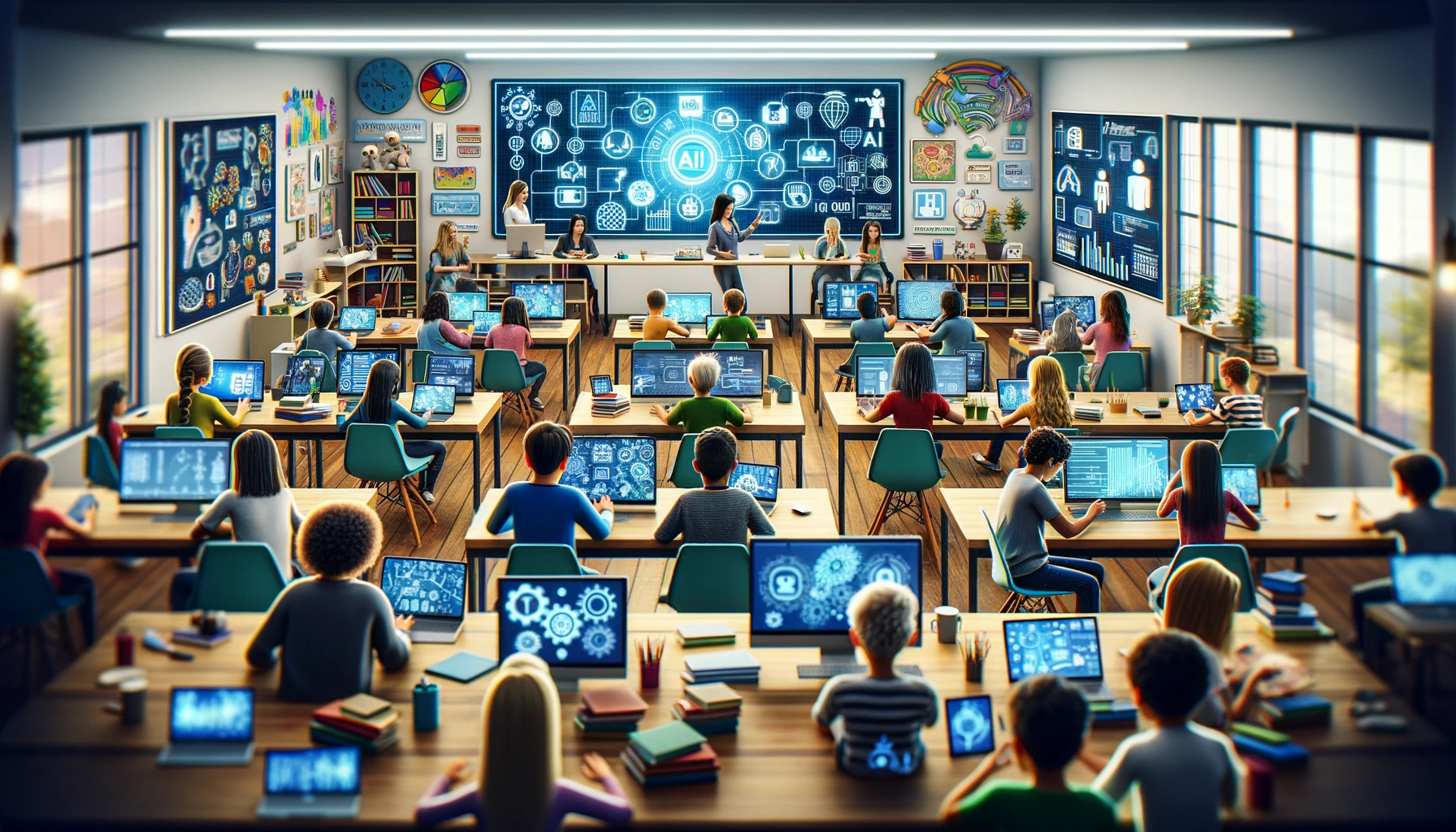
In 2025, classrooms don’t look like they used to. Chalkboards have given way to smartboards, and textbooks are being replaced by tablets. But the real game-changer? Artificial Intelligence (AI). From rural schools in India to top universities worldwide, AI is transforming how students learn and teachers teach.
The Rise of AI in Education
Over the past few years, AI has evolved from a buzzword to a practical tool. In education, it now plays a critical role in:
- Personalized learning
- Automated assessments
- Language translation
- Smart content creation
- Virtual tutoring
Let’s look at how these changes are shaping classrooms in 2025.
1. Personalized Learning with AI
Every student learns at their own pace. With AI-powered platforms like Byju’s, Khan Academy, and Microsoft Reading Coach, students now get custom-tailored lessons based on their strengths and weaknesses.
📌 Example: A student weak in algebra gets more practice problems, visual aids, and hints, while a faster learner can move ahead.
AI adapts in real-time — something traditional methods can’t offer.
2. Virtual Tutors and Chatbots
Thanks to generative AI models like ChatGPT, students can get answers 24/7. Virtual tutors can explain complex concepts in simple terms, quiz learners, and even help with homework.
In India, startups are leveraging multilingual AI tutors to reach students in Hindi, Tamil, Bengali, and more — breaking language barriers and increasing access.
3. Automation for Teachers
AI is a powerful assistant for educators too. It helps them with:
- Grading assignments
- Preparing lesson plans
- Identifying struggling students early
- Providing instant feedback
This frees up teachers’ time for more important tasks like mentoring and one-on-one support.
4. Breaking Accessibility Barriers
AI tools with text-to-speech, speech recognition, and real-time translation features are making education more inclusive. Visually impaired or dyslexic students can learn comfortably. Non-native speakers can grasp lessons in their preferred language.
In India, this is especially impactful for rural and underprivileged students.
5. AI-Generated Content
Teachers and institutions are now using AI to generate quizzes, flashcards, summaries, and even video lectures. Platforms like Canva and Quizizz use AI to create engaging classroom material instantly.
The Indian Perspective
India’s National Education Policy (NEP) 2020 emphasizes digital learning, and AI is at the center of this shift. The government is investing in AI labs, smart classrooms, and training teachers in digital tools.
Startups like LEAD School, Doubtnut, and Vedantu are bringing AI-driven learning to Tier 2 and Tier 3 cities, making quality education more democratic.
Challenges Ahead
Despite the benefits, there are hurdles:
- Data privacy concerns
- Over-reliance on technology
- Digital divide between urban and rural areas
- Need for AI literacy among teachers
Governments and institutions must address these issues to create a balanced and ethical AI education ecosystem.
The Road Ahead
AI in education is not a replacement for teachers — it’s a tool to enhance learning experiences. The classrooms of 2025 are collaborative spaces where AI helps build critical thinking, creativity, and curiosity.
In India and beyond, we’re just scratching the surface of what’s possible.
Conclusion
Artificial Intelligence is redefining how we learn and teach. From personalized learning paths to multilingual virtual tutors, the classroom of 2025 is smarter, more inclusive, and highly adaptive. As India continues to invest in education technology, AI will play a crucial role in shaping the minds of tomorrow.