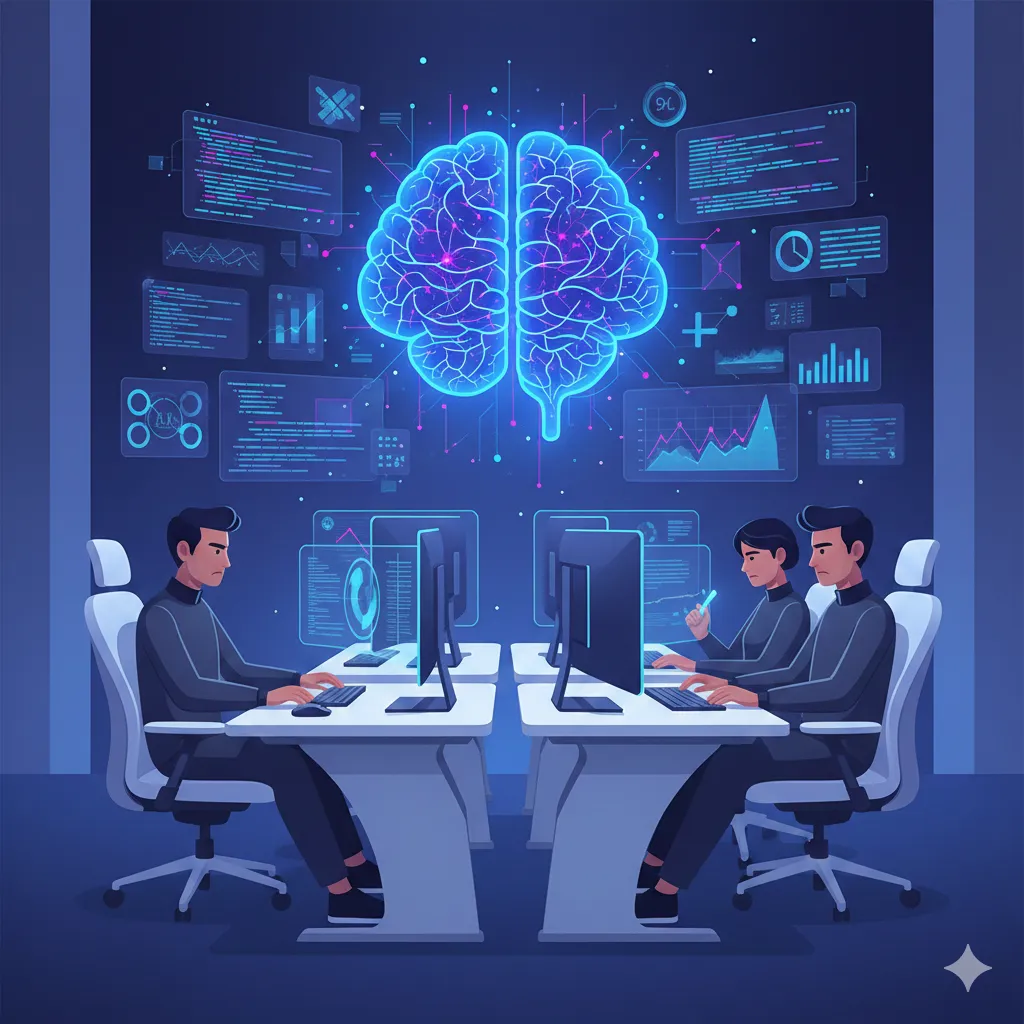
AI has quietly walked into IT companies, sat at the desk, and started doing everyone’s job without asking for a salary hike. No welcome email. No onboarding session. Just instant productivity and mild panic.
Once upon a time, IT companies hired armies of developers, testers, analysts, and managers who mostly attended meetings about other meetings. Now AI shows up and says, “Relax, I’ll handle it.” And somehow, it actually does.
This isn’t science fiction anymore. This is daily office life.
Why IT Companies Are Obsessed With AI Right Now
IT companies love efficiency the way coffee loves employees. AI promises faster delivery, fewer errors, and less human drama. That combination is irresistible.
AI can analyze massive datasets in seconds, automate repetitive tasks, and spot issues before humans even notice them. While people argue over Jira tickets, AI quietly fixes bugs, optimizes code, and flags security risks. It’s rude, honestly.
In a competitive market where clients want faster results and lower costs, AI feels less like an option and more like survival equipment.
How AI Is Actually Used in IT Companies (Not the Marketing Version)
AI in IT is not just chatbots saying “Hello, how may I assist you?” It’s deeply embedded into real workflows.
Software Development Gets a Brain Upgrade
AI tools now help developers write cleaner code, suggest improvements, and catch bugs early. Code reviews that once took hours are now partially automated. Developers still exist, but now they argue with AI suggestions instead of teammates.
AI-driven testing tools run thousands of test cases without complaining, getting tired, or asking why the build failed again.
IT Support Stops Being a Nightmare
AI-powered support systems handle tickets, predict recurring issues, and resolve common problems automatically. Password reset? Solved. Server alert? Flagged before it crashes.
Humans step in only when things get truly chaotic, which, let’s be honest, they usually are.
Cybersecurity Gets Paranoid in a Good Way
AI monitors network traffic, detects unusual behavior, and responds to threats in real time. Unlike humans, it doesn’t ignore alerts because it’s Friday evening.
With cyberattacks getting smarter, IT companies rely on AI to stay one step ahead instead of one breach behind.
Data Analysis Without Emotional Damage
AI analyzes user behavior, system performance, and business metrics without bias or burnout. It doesn’t get confused by dashboards or lie to make a presentation look better.
IT companies use AI insights to make faster decisions, optimize infrastructure, and predict future problems. Basically, AI tells them what they should’ve known already.
The Benefits Everyone Loves to Brag About
AI reduces costs, speeds up delivery, improves accuracy, and scales effortlessly. Projects move faster. Systems run smoother. Clients get impressed.
For IT companies, AI means fewer manual tasks and more focus on strategy and innovation. For employees, it means less boring work and more time pretending to be “strategic thinkers.”
The Part Nobody Likes to Talk About
AI doesn’t replace people overnight, but it definitely replaces excuses.
It exposes inefficiencies, skill gaps, and outdated processes. Employees now need to upskill constantly, because AI doesn’t care how long you’ve been doing something the old way.
There are also ethical concerns. Data privacy, bias in algorithms, and over-reliance on automation are real problems. IT companies pretending these don’t exist are just delaying future disasters.
The Future of AI in IT Companies
AI will not replace IT professionals. It will replace IT professionals who refuse to adapt.
The future belongs to teams that know how to work with AI, not compete against it. IT companies will need fewer repetitive roles and more creative problem-solvers who can guide, monitor, and improve AI systems.
Think of AI as the most efficient coworker you’ll ever have. Annoyingly smart. Extremely productive. Zero emotional intelligence.
Final Thoughts: Love It or Fear It, AI Is Staying
AI in IT companies is no longer a trend. It’s infrastructure.
Companies that embrace it thoughtfully will scale faster and work smarter. Companies that ignore it will spend years explaining why they’re “planning to adopt AI soon.”
AI isn’t here to destroy IT jobs. It’s here to make the industry uncomfortable enough to evolve. And honestly, it was overdue.