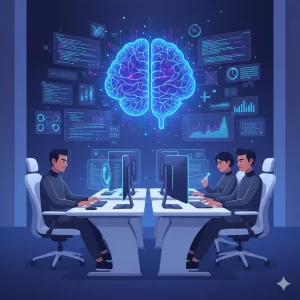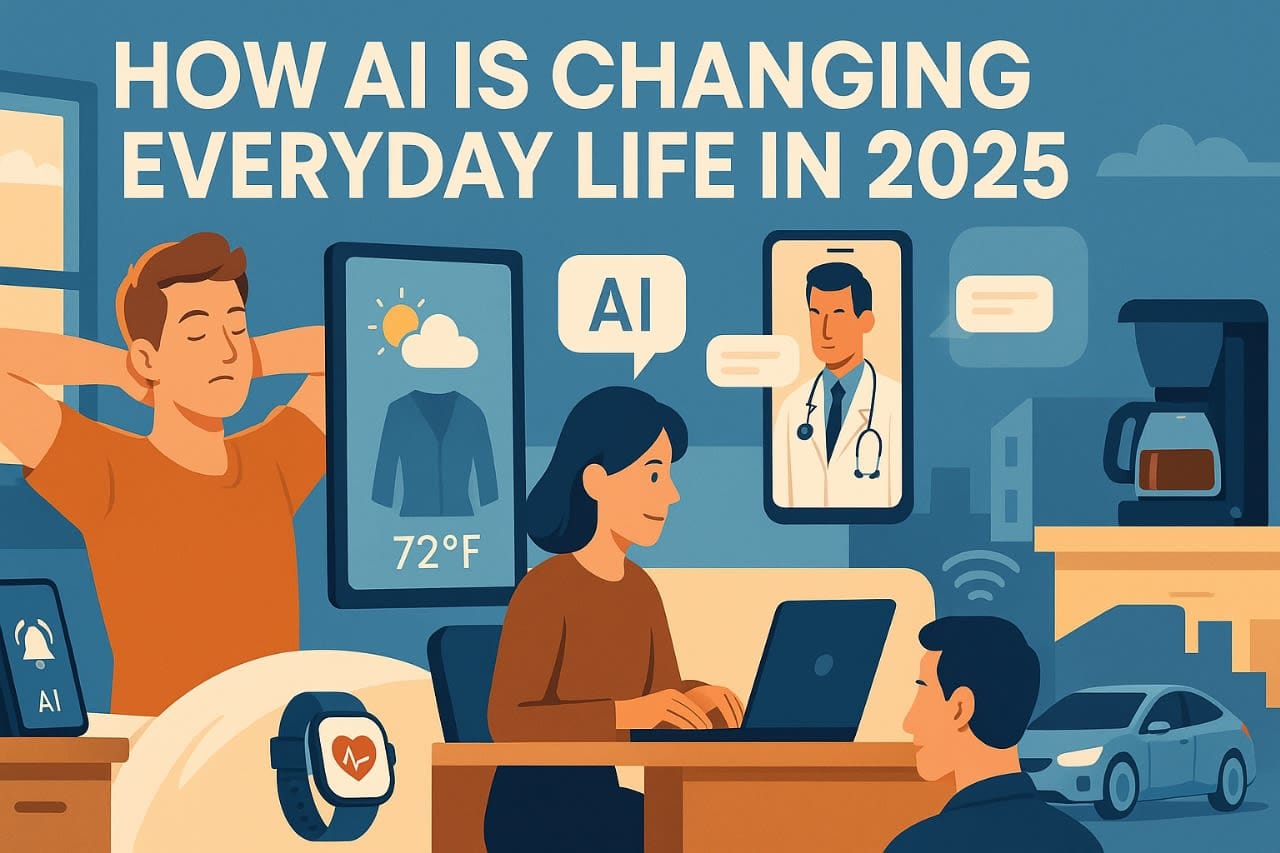
Artificial Intelligence (AI) is no longer a futuristic idea confined to tech labs or sci-fi movies. In 2025, AI has become a seamless part of our daily lives, powering everything from voice assistants and smart homes to healthcare and education. As the technology continues to evolve, its impact is becoming more personal, practical, and powerful.
What is Artificial Intelligence?
At its core, AI is the ability of machines to mimic human intelligence. It includes technologies like:
- Machine Learning (ML)
- Natural Language Processing (NLP)
- Computer Vision
- Speech Recognition
These systems learn from data, adapt to new inputs, and perform tasks that once required human intelligence.
1. AI in Smart Homes
In 2025, smart homes are the norm. AI-powered assistants like Amazon Alexa, Google Assistant, and Apple Siri now manage lighting, temperature, appliances, and even security. They learn your routines and optimize comfort and energy efficiency without you lifting a finger.
Example:
“Good Morning” routines now trigger your coffee machine, adjust your curtains, give you weather updates, and read out your calendar — all through AI automation.
2. Personalized Healthcare
AI is revolutionizing healthcare with early diagnosis, personalized treatments, and virtual doctors. Tools like wearable fitness trackers and AI diagnostic platforms analyze real-time health data and alert users to potential risks before they become serious.
Example:
Apps powered by AI can now detect heart irregularities, monitor diabetes, and even track mental health patterns through speech and behavior analysis.
3. Smarter Education
AI-driven learning platforms offer personalized learning experiences, adapting content based on a student’s pace, strengths, and weaknesses. Teachers also use AI tools for grading, classroom management, and identifying students who need extra help.
Example:
Platforms like Duolingo, Byju’s, and Khan Academy use AI to create tailored lessons for every student.
4. AI in Shopping and E-commerce
Online shopping has become hyper-personalized thanks to AI. Product recommendations, dynamic pricing, virtual try-ons, and customer service chatbots are all driven by machine learning algorithms.
Example:
AI can predict what you might want to buy next based on your past behavior — sometimes even before you search for it.
5. Transportation and Autonomous Vehicles
AI plays a major role in navigation apps, traffic prediction, and self-driving cars. Companies like Tesla, Waymo, and Uber are pushing the boundaries of autonomous travel.
Example:
Smart traffic lights and AI-driven ride-sharing services are reducing congestion in many major cities around the world.
6. AI in Social Media and Content Creation
AI now creates text, images, music, and even videos. Platforms like TikTok, Instagram, and YouTube are powered by algorithms that analyze your behavior and serve content you’ll likely enjoy.
Example:
AI-generated influencers and AI-edited content are gaining popularity and engagement, blurring the line between human and machine creators.
Challenges and Ethical Concerns
While AI offers convenience and efficiency, it also brings challenges:
- Privacy concerns
- Job displacement
- Algorithm bias
- Misinformation
Governments and companies must ensure ethical development and responsible use of AI technologies.
Conclusion
Artificial Intelligence is no longer in the background — it’s at the center of our daily routines. In 2025, AI has become more human-like, more intuitive, and more impactful than ever before. As we continue to embrace its power, we must also stay informed and vigilant about how it’s used. The future of AI is exciting — and it’s already here.